Category Archives: DC Moms Expert Series

How Not to Raise a Praise Junkie

Even better, how not to sound like you’re training a dog when you’re addressing your kids. That’s right, I would venture to guess we are all guilty of over-praising our kids. Certainly I’m not the only one and sometimes I can’t stand it when I hear unnecessary praise coming out of my mouth but it’s a habit, or I’m tired, and I can’t think of anything more original to say. Turns out, a high five would be sufficient.

I recently read the piece in the Washington Post about how boosting self-esteem through praise is back-firing and we are ending up with children who are afraid to take risks or tackle challenges for fear of not coming out on top. Michael Alison Chandler’s piece really struck a chord with me because as I raise my 3-and-6-year-old, I want them to be resourceful, to learn from mistakes, to have courage and take risks. I think taking the safe road is boring. But I also hear myself praising art work that frankly, doesn’t always warrant it. It’s a vicious cycle. So when local parenting coach Meghan Leahy agreed to answer some of my questions, I jumped at the chance. After reading Chandler’s piece, what it left me wishing for was some instruction and guidance on how to raise confident kids who aren’t “praise junkies.” So read on – Leahy’s advice is so good that I am tempted to print some of it out onto notecards and hang it around my house, to serve as reminders for those days when I am too tired to think straight.


Really...do we always need to give out trophies for everything?

WM: First, I realize the Washington Post piece is talking about school-age children and the importance of not showering them with too much empty praise – but where does this begin? As parents, are we guilty of showering too much praise on our really little ones and then it builds from there?

 Schools reflect the larger culture in which they exist in (i.e., when spanking was more common, children were corporally punished in schools, etc.)  So, yes, schools started the praising because parents really felt like their children wanted and needed it to succeed (academically).  Schools also used scientific studies, such as the ones found in behavioral psychology, to show that rewards are more likely to repeat a behavior.  The newer studies are showing, though, that rewards (praise) do not positively affect internal motivation, and in fact, the more praise that is heaped on a person (without any proof, or discussion of progress, or choice allowed on the part of the person being praised), the more that person’s productivity goes down (while the confidence stays high).  This, obviously, is a bit of a disaster for students, especially when we think that these youngsters will be our workforce in the next decade or so.

WM: On some level, it’s hard for me not to wonder if this is a classic example of overly-educated parents worrying about a first-world problem? In other words – who isn’t going to praise a baby for clapping his hands or building a puzzle? Do we actually need to be conscientious of how much we praise babies and toddlers?

 Merriam-Webster defines praise as 1. : to express a favorable judgment of : commend. 2. : to glorify (a god or saint) especially by the attribution of perfections.

So, babies.  Babies young brains require us to talk to them (often), smile, make goo-goo sounds, and exaggerate our facial expressions.  Babies reward us (ha!) with like-sounds and smiles.  They learn to articulate language this way, and also, importantly, read and understand facial expressions.  Literally, crucial brain growth that affects the rest of their emotional lives happens in these interactions…so, is this praise and is it bad?

No.  When we look at the first definition by Merriam-Webster, as parents we are showing favorable judgment!  Babies come out cute and utterly needy, and we must use the voices and faces and clapping to help their brains along. The problem comes when the babies grow quickly into toddlers, preschoolers, and school-age kids.  The needs of the growing brain do not require the clapping and big expressions, but the parents have developed a nasty habit. 

This is where the second definition of praise starts to become a problem.  Glorifying our children, looking for perfections: “the best picture!” “the prettiest girl!” “the fastest boy on the team!” are not growing the brain to cope and recognize feelings.  These statements are based on outcomes, and those outcomes are the best.  There is no discussion of progress or the specific effort required to get to a good outcome.  Hard work?  Practice?  Resilience?  Not mentioned in praise.  You can see praised kids because they are often searching out the adult “okay,” but may still remain apathetic about their product.

WM: This is so interesting. So here’s another question,  as a parent of two young girls, I go out of my way to praise my girls for their intellectual abilities. I’m very aware of the Princess/Disney influence and feel strongly that from the beginning, I am recognizing their smarts and their resourcefulness. How does this apply to what the Post piece laid out in terms of raising praise addicts? The piece points to the importance of not praising kids for basic accomplisments because it encourages them to rest on their laurels instead of challenge themselves.

 The article quotes Dweck, and she writes in “Mindset” that one of the major problems with praise is that it infers that you either “got it or you don’t!”  You are either smart or not, funny or not, sporty or not, arty or not, etc.  She has study after study that show these attributes can be grown in people, but when you praise, who would ever know that?  Since effort is not what is noticed, children box themselves into categories that allow little to no growth, and may not even be true!  And when life deals them a blow, there is nothing there to draw upon.  The children have not been taught to fail and get up, or to even experience discomfort.  They simply cannot believe it and would give up rather than experience the challenge and hard work.

WM: Can you give us advice on other ways to respond to children seeking praise? In other words, a teacher at my daughter’s preschool once said that when they come home with the endless art, to instead ask them what they think of the picture or how it makes them feel – thereby getting around not unncessarily praising them for something that well, isn’t necessarily praise worthy. What sort of advice do you have along those lines?

You can notice children and encourage them without using praise.  Encouragement is what all forms of positive parenting use, because it means to give heart, to bring spirit or hope.  Encouragement focuses on the process, it focuses on the child (not what the adult thinks and judges), and it doesn’t make something “the best!”  So, here are some examples of the differences between praise and encouragement:

Your child brings home a drawing:

Praise:  That is the prettiest picture I have ever seen…I love it!

Encouragement:  I see you used green in this corner, tell me more about that.

Your child makes the basketball team:

Praise:  I knew you could do it; you are the fastest on the team.

Encouragement:  You have practiced hard for this, how does it feel to achieve this goal?

Your child gets all her math homework finished quickly and it is correct:

Praise:  You are so smart in math!

Encouragement:  I have noticed how quickly you worked, show me some of the problems and how you solved them!

Your child loses the track race at school, coming in 3rd:

Praise:  You are still the best, you just didn’t eat enough breakfast!

Encouragement:  {{hugs from Mom and Dad, and when the child is ready to talk, you can say…}}  I saw someone running hard today.  How do you feel it went?

You will see the obvious difference between praise and encouragement.  Encouragement invites discussion, does not try to solve, and does not glorify the child. Is it okay to celebrate something wonderful child?  Yes, of course.  Praise is like cotton candy, as my former PEP leader and friend Chrisy would say: A little is great and quite enjoyable, but a lot of cotton candy?  Rots your teeth, makes you feel sick, and doesn’t help you grow.

I would argue little of what we praise needs so much celebration.

Brushing teeth, using the toilet, showing kindness, going down a slide, setting the table, helping a little brother…these are acts that should be noticed and grown, but celebrated?  Clapped over?  High-squeaky voices?  No.  Life will not do this for them, therefore, we should encourage these acts, not praise them.

WM: Really great advice – the distinction  makes so much sense. Do you think we are a culture that is raising young kids to be praise addicts? I  know so many people feel that is the case with sports and every kid getting awards and trophies instead of just the few who might really be set apart. How do you break yourself and your kid from the habit of empty praise?

As parents, we have to look ourselves in the mirror and ask: “If my kid is totally average (which they probably are, the bell-curve is the bell-curve for a reason), can I get okay with that?”  You might say, “Yes!” and I still may not believe you.

Our culture looks for results, acceptance, rewards, and outcomes.  I get it, because it is a good way to assess if a business is successful.

But our children are not businesses.  You break the cycle of praise when you realize how much you are robbing from your child when you focus on results.  When you put your child into boxes (yes, even over puzzles), your child is made less than they are.  Beautifully, perfectly average and brimming with potential.

If, as a parent, your children’s wins and losses weigh heavily on your soul, you need to fill your own bucket up. 

Do we protect, love, support, and guide our kids?  Of course.  We don’t allow a three year old to run into the street to “see what happens” because the outcome could be death.  We don’t hand over car keys to 16 year olds without classes and supervision, and simply “hope that works out.”  No.

But if you are running scared as a parent…picking up everything, picking all of the clothes, making all of the food, “remembering” all of the homework, finding all of the library books, running to every try-out (when the kid doesn’t seem to care)…then praise is going to communicate to your child, “You are a product; I am the CEO, but I want you to somehow grow a backbone and be a great kid and adult.”  It just doesn’t work.

We love our children.  We want them to be happy.  We want them to have what we didn’t.  Or have what we did.  Or have something totally different that we read in a book.  Ultimately, though, our kids have to find their own happiness because it is not about us.

WM: You’ve given us so much to think about. To wrapt it up, do you have any age-appropriate guidelines? Again, unless you have ice running through your veins, there’s no way you can not react happily and with praise to babies and young toddlers performing seemingly mundance things. But how do we adjust and alter our praise as the child gets older?

Whenever what you would say sounds like how you would train a dog, stay quiet.  Instead, stop talking so much. Hugs work, for all ages.  Winks, high-fives, and special signs work too. When you have to talk, narrate what is happening.  “I have a baby who is feeding herself!  Look at those hands go!”  Happy?  Yes.  Clapping like a fool in the face of your child?  No.

When you have to speak, notice.  Notice process, notice hard work, and notice the characteristics and values that make up a person who achieves something great.  Notice growth.  “Last week you could not reach the sink, and now you can wash your hands all by yourself.  You are really growing.”

And when something great happens, do something fun!  Go out and celebrate with friends and family…toast each other.  Mention accomplishments and the work that went into it.  Have a sundae party.  Have a sleep-over.  Eat dessert for dinner.  HAVE FUN.  Because when you stop praising and celebrate the REAL accomplishments and work, children remember that.  It actually means something!

Thank you so much to Meghan for giving us such great, practical and useful advice. You can follow Meghan’s blog for more advice or learn more about what services she offers or you can catch her blogs for Discovery here. And of course, be sure to “Like” the WM Facebook page, maybe on there I will explore why I am a chocolate junkie. Will anyone praise me for that?

New Year…Get Kid’s Things Organized!

“You can always be organized but with children, you’re not always going to be neat,” says local mom & home organization expert Rachel Strisik.

Can I hear the “RIGHT ONs” bouncing across the beltway right now?

What? What is that I hear you saying? Say it again? Should we shout it from the rooftops? Can I remind myself of this mantra when I get into my definitely not neat car or open one of my closet doors and duck for fear of what might just come tumbling out at me?
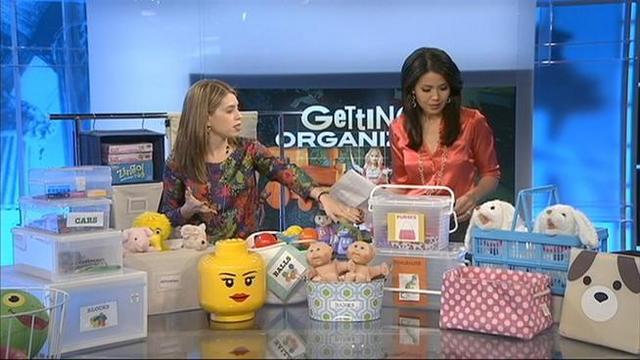
Rachel on NBC4 with Angie Goff

What about when I cringe and peer into the playroom?

Come to think of it, maybe I will make a theme of blaming my shortcomings on my children in 2012 because even though I am awesome, I fall short in a few areas. Husbands are part of the problem of things not being…ahem…neat (need I remind you of the dis-mantled crib that remained in my upstairs hallway for a few months earlier this fall?).

As we know,  2012 is the year of I am Awesome and Moi Loves Moi. Part of being awesome is being organized. So, who best to talk to about this problem than Rachel Strisik, home organizer extraordinare.

Rachel started her home organizing business back in 2005  before her twin girls were born. Along the way, she also spent 2.5 years working for Stacy London, who many of us know from What Not to Wear. Bottom line – if you need some organization in your life – then this is the local area mom to call. We had the chance to talk in late December and I have lived by her words since we last spoke.

Rachel pointed out that holidays and birthdays are the perfect time to weed through playrooms and make room for the new stuff. With her own twin girls, who turn four this month, she’s made a regular habit of looking through what they already have and starting a donate pile, and now her girls participate in this activity. Typically I am skeptical of any sort of “involve the kids in cleaning” tips because they come saddled with “They will love it” advice, and I used to wonder if that was a euphemism for “Really, you’re going to just give yourself another reason to listen to your kids whine while you try to do something productive.” But, surprisingly, I have found that my 6-year-old truly enjoys participating in the “donation pile” cleaning activity and we make up stories about the younger kids who might use this certain toy and what they’ll be like. Plus, we all know from Toy Story that no toy is happy until it has a child to play with it, and so it’s fun to remind her of that as we dust off the toys she’s outgrown and I remind her why she actually can part with it.

Another reason that cleaning out toys is important is this: Rachel reminded me of the impact of visual clutter on both kids and adults. A chaotic cluttered room is not peaceful, or even something anyone wants to set foot in. Kind of like my car. A common solution to tackling the visual clutter is to rotate toys. Frankly I’ve always known this is a good idea but I just don’t see myself doing it. Rachel’s advice is to actually schedule time on your calendar, like a doctor’s appointment, and then you have no excuse – you’ve set aside that date and time to approach the clutter, rotate it out and leave only the toys they actually play with in sight. And it is true that when they eventually see a toy again that they haven’t seen in a while, they are going to play with it, and eagerly. I really appreciated the tip of scheduling the time in your calendar.

Finally the dreaded topic of kids art work came up. Rachel raised the issue of taking pictures of the kids artwork and loading them into a Snapfish album. I’m sure like moi, you’ve heard this approach several times and if you are anything like moi, you are apt to dismiss it as just high maintenance and unrealistic.  But then Rachel made two points that really struck a chord with me. First, she said that what she advises clients to do is write down what the child said about that piece of artwork and include that statement in the Snapfish album, so when they are older and looking back on it, not only can they see what they made but they can read what they thought about it. I loved that idea. And then she said this – we all need to be “conscious of what we are saving because we are passing it along to our children.”

And she is totally right. I myself have boxes of  my old cherished art work from my youth, hogging up prime storage space in my basement, that my mother eagerly passed on to me. Do I ever look at it? No. Can I bear with tossing it out? No. Do I have a problem? Maybe. So do I need to repeat the cycle and pass it along to my girls? Probably not.

Rachel was on NBC4 with Angie Goff on Saturday discussing kids room organization tips in-depth – so if you want specific advice on containers and storing and organizing toys, check out the link to her fabulous interview.

In the  mean time, happy organizing! And tell me – do you rotate toys out or have you ever done a photo album just of the kids artwork?

For more true confessions on how not-organized I really am..and other such fun…be sure to “Like” the WM page on FB.

Today’s Topic: Pick your poison – Throwing a Kid or Adult Halloween Party

Look, I might not love the over-crowded pumpkin patches in our area, but that doesn’t mean I don’t love Halloween. I actually really love Halloween.

Beautiful display from MarthaStewart.com Photo Credit: Johnny Miller

 And many of you know I love a good theme, so what better time of year to throw a creative party, than now? For today’s WM expert series, I spent some time with Amy O’Brien, a local mom, co-founder of an amazing area boutique catering company, Foodie Event, and Halloween-party hostess extraordinaire. Amy and her business partner, Suzanne, actually realized the opportunity they had to start their own catering company based on the growing success and feedback from their annual Halloween parties. So for some original, creative and fun ideas to throw your own bash this year or in future years, read on.

Q: Tell us about your Halloween parties in, let’s call it, the early years because I know they have since evolved from one party to two parties.

Yes. Initially I put together a Halloween party for kids and adults and that eventually grew into a nightmare because it became too big. There were just too many kids. After some time, I broke it up into two parties, one for the kids and one for adults. This also helps the adults stay longer because when your kids are there, so many people tear out of the party so early in the night to get home to put the kids to bed.

Q: Totally agree. So tell us how you organize and plan for a kids Hallowen Party.

This does look really cute

I like to throw the kids party the Saturday before Halloween. And I firmly believe a kids party should last 90  minutes. I’ve found that a 2-hour kids party is suicide. After 90 minutes they just get tired. I organize the flow of the party well in advance, so I know each step and what game comes next. After the kids have some time for free play and admiring costumes after arriving, I move into a couple of games. One game that’s always a big hit is the donut on a string. Think of it like a clothesline of donuts, with each donut  hanging at different levels, and the kids have their hands behind their backs while they eat these little donuts. The first one done is obviously the victor and it’s a hilarious game to watch all these kids participate in with their costumes on. I also like to do it in 2 waves which makes it more fun for the kids because they then cheer their other friends on. Other games that are classic party favorites are pin the nose on the pumpkin and the beanbag toss into the cauldron. Another idea is to blow up orange balloons and black balloons, stick glitter or small prizes in the balloons before blowing them up, and then tape  them in the shape of an orange pumpkin or black spider to the wall. If you are doing the black spider version, I like to affix streamers to the balloons for the spider’s legs. Each kid then gets a pin and gets to pop the balloon. If they pop a glitter balloon, it’s a fabulous colorful explosion but they get to pop another until they get a surprise. Bottom line is, I’d plan for about 3 games for a 90 minute party.

Q: I love those ideas, especially the donut on the string one. Now how about food and decorations?

Keep it simple. I keep the food out the whole time and fill glass cylinders with pirates booty, goldfish and then have a simple cupcake theme. Then I like to end the party with a costume parade and the adults can all watch and cheer on the parade. One year we also had a “Haunted Hike” in our back yard. Different parents were dressed up in costume and would hide scattered around the backyard and then would hop out and make scary noises as the kids came by, like hissing like a snake or howling like a Werewolf. We told them spooky scary stories as we walked through the backyard. The kids loved it and it’s so fun for the adults because kids will believe anything. As for decorations, I usually make my own and supplement with things from Target or Oriental Trading. You can also find a lot at the Dollar Tree on Rockville Pike next to the Trader Joes. There’s so much you can do with just draping cheap white sheets, putting out test tubes to make a Mad Scientist Lab and throwing a crow in a tree.

Q: Love those ideas. Now let’s move on to the adult themed party. Tell us about your adult-only Halloween party from last year because I am sure you aren’t divulging your secrets for this year’s party. And let’s start with invitations – paper or electronic?

So last year the theme was Studio 54 which was really fun because there is a certain mystique to the theme.  I’ve also found that you need a theme for adults because everyone wants something to latch onto. Plus they know you are serious about dressing up when you assign a theme to the party. Parties are what I do, so I just don’t care for electronic invitations. I am always going to head to Paper Source and make my own paper invitations. And the prices are so reasonable at Paper Source, I think I got 200 invites with reply cards for $200. The iconic theme of Studio 54 was “Throw caution to the wind and glitter in the air,” so much to the chagrin of many adults, of course I added gold glitter to invitations. But really – when do we as adults ever get invites with glitter?

Q:  I absolutely love it – and totally agree that paper invites are the way to go. So how did you decorate and what sort of food did you serve, Halloween themed or Studio 54 themed?

For decorations, we made some trips to our favorite Value Village for period furniture. So ended up with a little black sofa for one corner, a pit of pillows area with fur, end tables with fondue on them, and 2 gold square tables with finger foods. In terms of food, we stuck with the 70s theme, not the Halloween theme. We did Halloween food the year before but decided it was macabre and ugly. Obviously we aren’t into drugs, but well, we were throwing a Studio 54 party, so we served food on mirrored trays and then took it a step further. We cut pixie sticks, then dumped them in lines on a mirrored tray and passed it around for people, like it was coke. Obviously we had a huge disco ball hanging in my back yard which is still there and I made a playlist to flow with the night. The cocktail hour was chill music, think Olivia Newton John and Barry White and then as the night progressed, we slowly moved through the 70s and 80s to more current music so everyone was really dancing.  What we found is that people didn’t really eat much of the heavier foods so this year we are sticking to more of a dessert theme. And I’ll tip my hat – the theme of this year’s party is Gods and Goddesses.


Why wouldn't you throw a 70s theme party - you know the Village People will show up

Q: Okay. I love it. The pixie sticks on mirrored trays is absolutely hilarious. And this year’s theme is so creative. Tell us about your business that you’ve recently started, Foodie Event.

Sure. It’s a custom catering and event design business that I started with my friend Suzanne. We are very hands on, we like to meet with our clients to get a vibe on what kind of party they are looking for and then we take it from  there with the food and design. It’s a lot of fun and really did emerge because we realized we were always the people in our group of friends who were throwing the parties.

Awesome. Thank you to Amy for her great advice today and unfortunately, Amy’s entire computer crashed before we met and she lost her pictures, which is why I don’t have pictures from Amy’s parties included in today’s post. Surely I’m not the only one who is disappointed to miss a shot of that disco ball hanging in her yard and those mirrored trays. Happy Halloween party-throwing everyone!

Today’s Topic: Owning a Business…along with Decor & Organization Tips for Kids Rooms

I am all but certain the Pottery Barn Kids catalogue is designed, printed and distributed to make parents feel like crap. I wince when I see it waiting for me in the pile of mail. I can hear its contents of happy children and organized playrooms mocking me as I inch towards it. And yet, like a masochist, I  can’t just throw it out. I have to open it. I get sucked in. I start to wonder not only what is wrong with me but why my children don’t look that happy and that clean and why doesn’t my playroom EVER look like that? So for this week’s expert, I turned to famed Washington designer and mom of two, one just 2 months old, Liz Levin of Liz Levin Interiors and Liz Levin Nesting. Not only does she provide us with some great tips on decorating and organizing a kid’s playroom but she also weighs in on the age-old question of balancing work with life, especially as a small-business owner.

Q: Tell us how long you have been in business for yourself?

Sure, I started seeing my own clients in 2004. I hired my first assistant designer in 2007 and by last summer, I had 3 people working for me as independent contractors. My operations manager is actually my sister. I always knew that I wanted to be in business for myself, well before I had children I knew this, and before I had the kids I really  had time to ramp up and work 24/7 on building my business. I was eager to work for myself but I knew I wanted to have a career that would allow me to see my kids right after school.

Q: We’ve been talking here on WM a lot about “balancing” work and family life and so, tell us how you, as the owner of your own business, manage to draw the line and really separate your work from your home life and give each one of them time?

It is so hard. Working for yourself, you get all the good and all the bad. It is very easy to get sucked in and believe that someone’s living room is a life or death emergency but with kids, I’ve had to learn to draw the line in the sand and keep the perspective that I have to set boundaries and stick to them. I worked out of my house at first when I had my first daughter and that worked out fine until she was almost 2. Then she was very aware of me being home, I practically had to sneak to use the powder room so she wouldn’t see me and I always worried that clients could hear a toddler in the background of phone calls. Now I have my own separate office space in Georgetown and I take Fridays off as my day to be at-home.

Q: I’ve found that it’s very difficult to stick to a shorter work schedule, that it takes a lot of confidence to say “no” to people and really stick to the plan of only working your set days of the week. Do you experience this and how do you handle it?

Definitely. Initially I worried that it took away the legitimacy of my business to work a shorter week. I would have my assistant handle calls because I didn’t want people to know I was home with the kids. I really was insecure about it but I kept banging myself on the head and reminding myself that this is my business and I can do whatever I want! Where I would then get tripped up was figuring out what it is that I wanted – did I want a bigger office, bigger staff or did I want to be home more? The reality is that you can put as much into it as you want but if you do good work, then you can take time off during the week and people will respect it. In my path to discovering that and believing in that, I blew plenty of nap times on conference calls and struggled with pulling myself away from work. I also worried when I saw my team, who didn’t have children, coming in earlier than me and staying later than me. But again, you realize that you put this stuff on yourself and we don’t need to put so much pressure on ourselves to be perfect and do it all.

Q: OK. I could talk to you about working and home life all day long. But we are here to also talk about what might be the end of me: playrooms. And why I want to set a Pottery Barn Kids catalog on fire after reading it. It makes me feel so inadequate in every way. How does one have a playroom that looks like a magazine?  

Note Liz's use of bookshelves with closed doors to hide kid toys and splash of color. Photo Credit: Angie Seckinger Photography www.angieseckinger.com

Well first, there were probably 20 stylists without any children in sight who made those playrooms look like they do in the magazine. And the problem is that we all have more toys and more stuff than we do storage. I have a small townhouse and my daughter’s room is also part playroom. The truth is we all need to purge and store. Head to the Container Store and purchase some bins that fit under a bed, I use those for storing art supplies, plastic food, and then use baskets for blocks and puzzles. Initially we had bins in the living room but we learned that the kids don’t play with  half the stuff in the bins because they can’t reach that far into the basket. Storing the toys also helps because when they haven’t seen them in a while, they will actually want to play with them. Organizers often tell clients to have more storage space than you do stuff – and this really applies to children’s playrooms. Learn to think of yourself as a toy collector and reality is that you will be adding to your collection over time. So if you purchase storage pieces that have space for more things, you will have space for them as your collection grows. The other thing I am discovering and reminding myself is that kids don’t need a room full of stuff all the time. Less is more.

Q: I love this idea of thinking of ourselves as toy collectors. Great advice! So how about colors – are there trends in color for kids playrooms – any popular colors?

I don’t really think there are trends for colors in kids rooms but I encourage my clients to look for inspiration pieces when decorating a room. One playroom I did for a client who had 2 sons was midnight blue and white with red accents. We used navy window treatments and painted a blackboard wall. It was a really cute room but it also didn’t look like a romper room. I had a catch-all room at my house where I used a graphic poster as my jumping off point and accented the room with red-white wallpaper and a red desk. The trick when doing these rooms is more about the appropriate storage. I once had a client who added a built-in window seat with a lid that opened up and they added 4 dividers inside. This was a great idea for the kids play room but then they learned the only issue was the depth – again -  like those large bins I used to have in my living room – the kids couldn’t easily reach all the way inside. So that is something to consider as you are trying to figure out storage and kids rooms.

The dining room chairs...vinyl.... Photo Credit: Angie Seckinger Photography www.angieseckinger.com

Q: More excellent advice and I know I regularly fall victim to thinking something is a great storage piece and then realizing it is way too deep for my little 2-year-old’s arms to reach inside. Let’s move on to talk about fabrics when decorating with kids. Any advice?

Sure. Obviously you want to look for stain resistant materials like ultra suede or leather. I often use nano-tex technology   to treat material on furniture for homes with kids or pets to really keep it stain resistant. Outdoor fabrics are now softer and I like to use them as well. I have a chair in my living room with outdoor fabric on it. Another cool way to go is vinylizing fabric. It will give it a really funky look, like vinylizing a banquette seat in a pretty bold pattern and then it wipes off easily. I saw it once in an Elle Decor magazine and thought it looked great. Since seeing it, I’ve done it for a client.

Q: Ohh – I love that idea and would have never thought of it myself. I can see how that can be funky and certainly kind of retro. How about carpets?

Dark carpets are a great way to go with children because you really can’t see anything on them. There is a company called Fiber Seal and they will come treat your carpet for you, it’s not toxic and it should last about 18 months. I put a cream carpet by my front door and used Fiber Seal on it and it really works beautifully.  You don’t have to be in the trade to use them.

Awesome advice from Liz Levin today. I really appreciated her insights not only in running a successful business while also spending time with her kids, but on how to think of ourselves as toy collectors and manage the chaos with style! For more design tips, here’s a link to 10 tips from Liz Levin featured on HGTV. Be on the lookout for more expert topics from the amazing moms living around us here in DC, and be sure to “Like” the Wired Momma FB page or subscribe to the RSS feed to easily keep up with my shenanigans and rants.